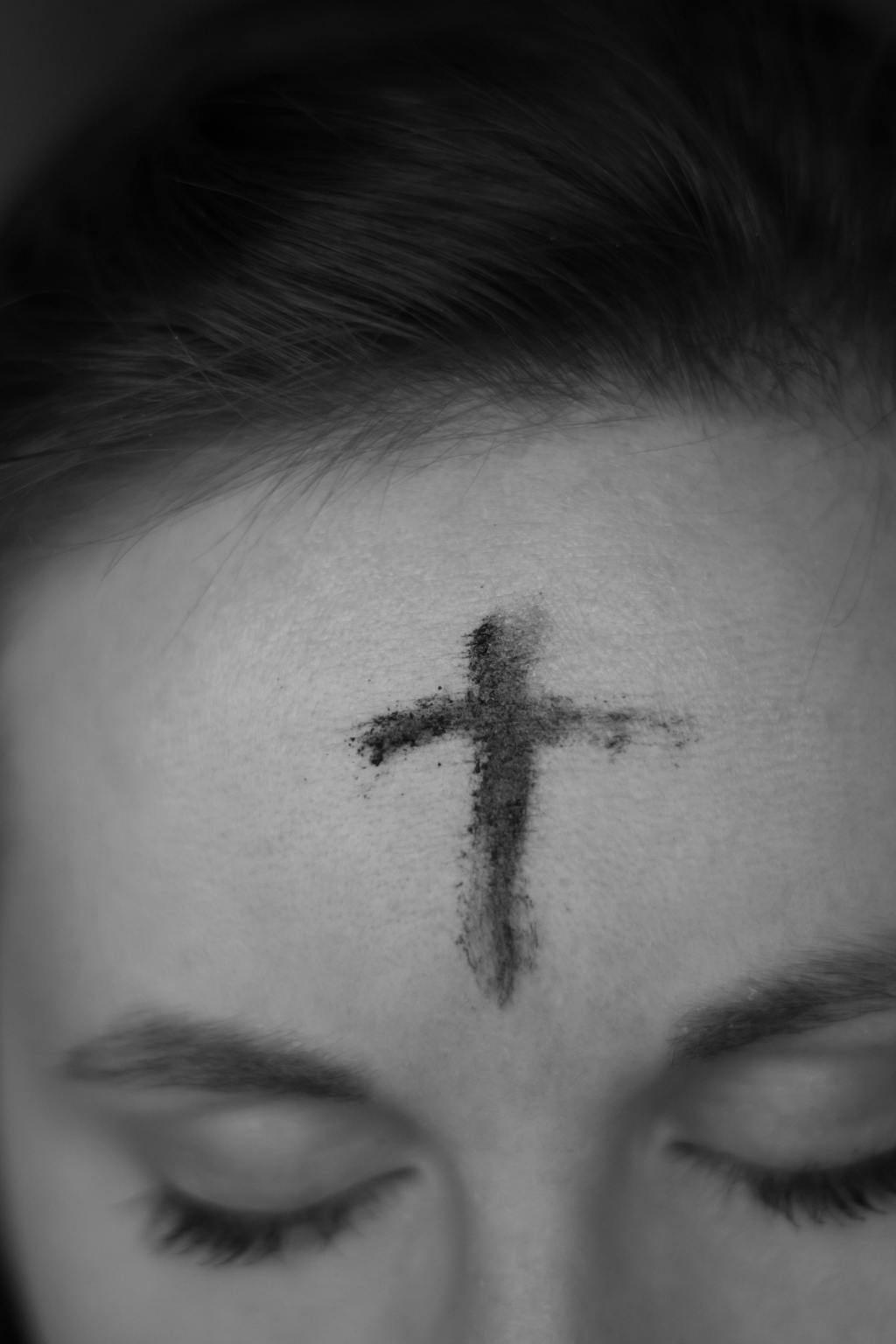
Ash Wednesday has become my favorite holy day in the Christian church. It’s odd, I know, that someone so tormented by the concepts of sin, failure, and death would be drawn to such a holy day, but I am. For the past two years that I’ve been living in Western North Carolina, I’ve attended Ash Wednesday services, and they have been my favorite, even as they focus on our sinfulness and our death. But here is why I believe I’m drawn to this day now more than ever.
First, sin is redefined. Growing up, sin was some cosmic ledger that was kept of every impure thought, every accidental slip up, every unknown offense. We were sinners and God’s anger raged against us unless we prayed a prayer and accepted Jesus.
And it was terrifying.
Death as an extension wasn’t natural. It was punishment. Something to fear because if you died and that ledger didn’t look good, you would spend eternity burning because you said a bad word or had a steamy thought that demonstrated you weren’t a true Christian.
Now it’s all different in my mind.
Sin is not some mystical book of wrongs you’ve done to hurt a supreme being, but instead it is a common condition. Ash Wednesday allows us to look full faced at the fact that, for some reason, humanity can be cruel and mean, and that all of us, to some extent, take part in that cruelty.
We are not as generous as we wish to be; we are not as caring as we claim to be; and our lovingness often stops with those who are like us and rarely extends to strangers and enemies. For some reason humans tend to hurt one another, disregard the earth we are to take care of, and choose conflict over peace.
Ash Wednesday is a day in which we pause to behold that fact, and to find our own complicity in it.
But I have not experienced it in a judgmental way. Instead it’s comforting to know that we all do this, and Ash Wednesday and Lent is an opportunity to realize the ways we’ve faltered, and to commit ourselves once again to doing better, giving up our violent and selfish selves and taking on the nature of the redeemed.
Death, then, is no longer punishment for wrongdoing as much as it is a natural part of life. “Remember, from dust you have come and to dust you shall return.” That, also, is not a criticism or put down. We are made of the substance of stars and earth. We are all interconnected; the tree, the mouse, the mountain, and I are all of the same substance.
That doesn’t diminish me but elevates everything else to the realm of holy. But, as said, it doesn’t diminish me, because for this time that I am on earth, this collection of dust has been formed by God and called good. The breath of life within me was breathed from the mouth of God, and I am, as is everyone else in the world, a child of God.
What happens with that breath when I breathe my last? I don’t know exactly. But from dust I am, and to dust I will return. And to return to dust, is to return to God. And in that I find comfort.
 Blake Hart
Leave a comment