Over the past couple of decades, there has been an increasing emphasis on diversity. We need more diversity in the workplace, churches and other places of worship need to be more diverse, we need more diversity in leadership positions. There has been a push to increase anti-discrimination laws. They need to include race, nationality, religion, gender, gender identity, sexual orientation, ethnicity, and more. This is good. This is important.
But it is not enough.
In the end of the day, as most any professional in the Diversity, Equity, and Inclusion workspace will tell you, diversity is nothing more than a numbers game. How many women do we have working here? How many minorities do we have in middle management? Are we seeking out persons of color to fill our employee rosters? Are we hiring individuals who are gender non-conforming or non-heterosexual?
These kinds of questions seek simple numerical answers. It boils down to nothing more than statistics in most cases, and while statistics can be helpful they don’t address underlying systemic inequities, toxic cultures, and economic disparities.
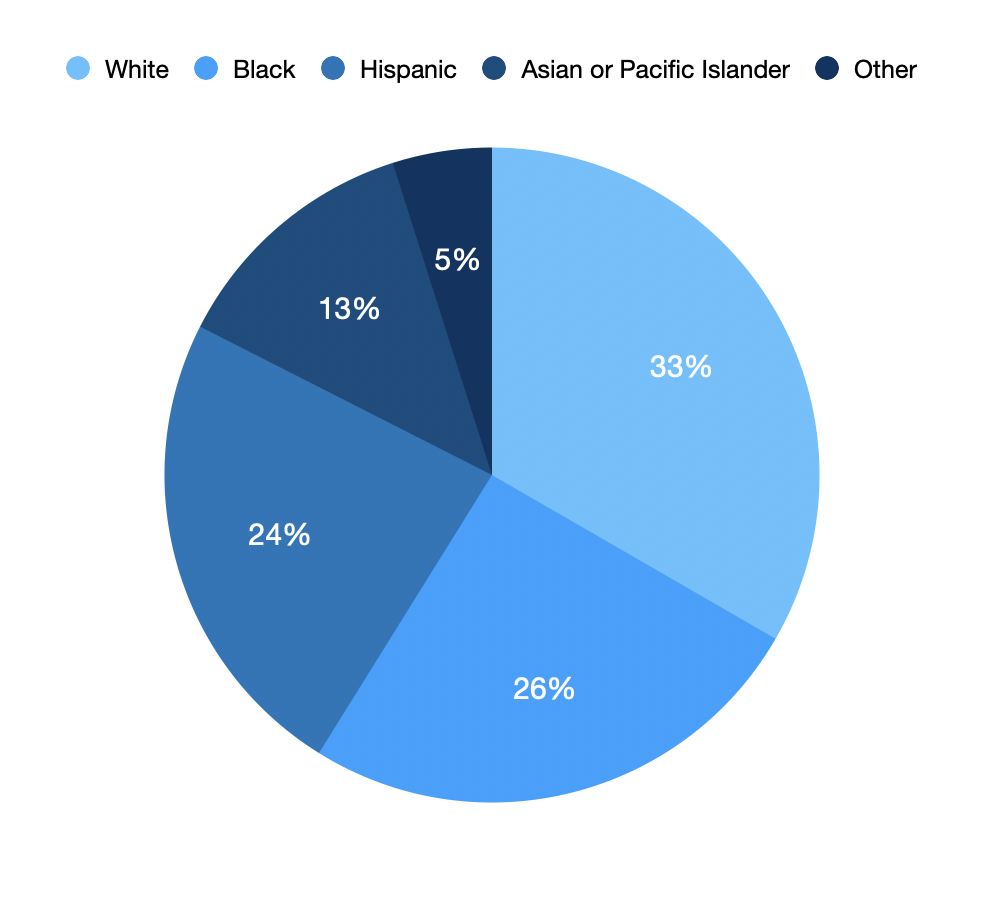
Take for instance, New York City, one of the most diverse cities of the United States. According to NYU’s Furman Center’s analysis of census data, New York City is 33.3% White, 25.5% Black, 23.6% Hispanic, 12.6% Asian or Pacific Islander, and 4.9% are from other ethnicities and/or races.
From the point of view of diversity, this is reason to celebrate. New York City is a thriving and diverse city. Just look at the pie chart! It is an example of what forecasters are predicting for the nation as a whole; no longer are we a white nation, but a majority-minority nation where no one race or ethnicity makes up more than 50% of the population.
But let us look at this from a few different points of view. First let’s take the simply community level view. New York is a huge city, so are the communities as diverse as the city? The quick answer is no.
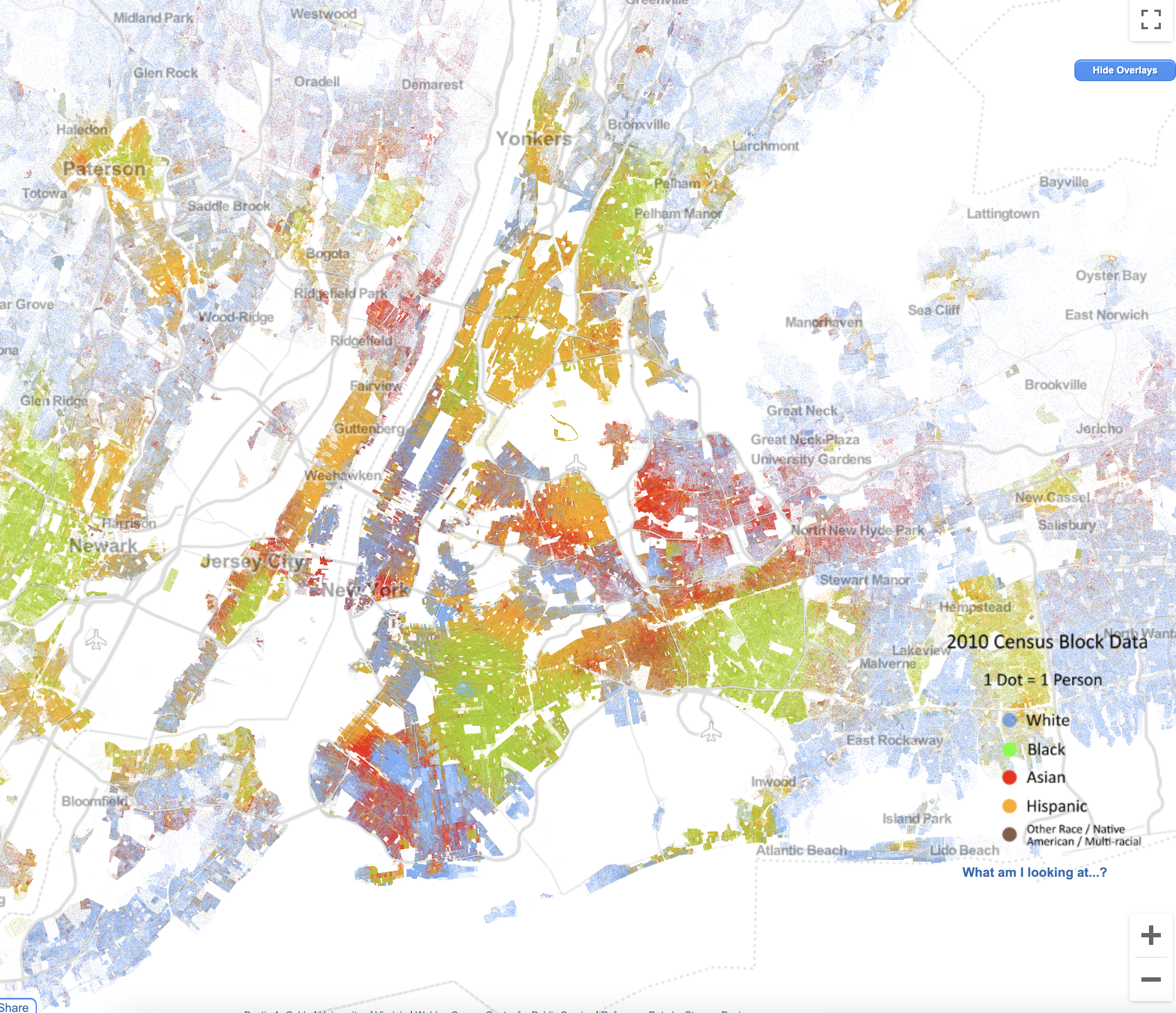
Just look at the racial dot map above. Using the same census data that shows how diverse the city of New York is, we can also see how segregated the city of New York is. There are very few areas where different ethnicities and races live together in community. The diversity is not integrating communities. Most people still live rather segregated lives, whereas even though you may work with and interact with people of other ethnicities, most go home to areas of homogeneity.
Looking deeper into the research of the Furman Center, we see that the above divisions are also divisions of poverty and wealth. The poverty rate in White neighborhoods is 10.4% whereas the poverty rate in Black, Hispanic, and Asian neighborhoods is 17%, 24.4%, and 20.5% respectively. Also, the median income for White, Black, Hispanic, and Asian households is $124,470, $57, 847, $48, 845, and $51,656 respectively.
To many this is not a surprise, but to many others it is. And therein lies the reason that a focus on diversity is not enough.
Equity is what we need. The systems of our world have been stacked in favor of people like me, white, male, heteronormative, for far too long. Even if I personally am not prejudiced against others, I still reap the benefits of systems that are. That’s why a simple focus on diversity isn’t enough.
Here are a few things that we must focus on if we are going to right the course of our society and achieve the equity that is necessary.
- We must evaluate what policies, systems, and structures led to the inequities we see today. We have to study and understand policies like redlining, imminent domain, mass-incarceration, and more.
- We must analyze current policies, systems, and structures that continue to create inequities in our midst.
- We must fight for a culture of inclusivity where the points of view and the voices of every person is heard and respected.
- People who have benefited from systems of oppression must be willing to listen to the voices of the marginalized, and be willing to give up their status and privilege.
So yes, let us celebrate diversity. Let us enjoy the cultural richness that our complex modern society brings us. But let us not stop there; let us move forward with conviction and intentionality to the equitable future that our society needs.

 Blake Hart
Leave a comment