Everyone is talking about a “return to normal” after the pandemic. Some are longing for it; they desire to recover that which was lost. Other’s say we shouldn’t go back; they say that normal wasn’t really working in the first place. Personally, I feel both in my soul. I want my kids to be kids again, to go to school and playgrounds. I want to go out with friends, get a beer, and laugh. But I also realize that this pandemic has stripped our society of any facade of community, of empathy, and of compassion. The ugliness of American culture has been laid bare, and we must deal with that if we are to progress as a society.
The Mask Debate

One debate that has laid bare the horrors of our culture is the use of cloth masks to slow the spread of COVID-19. Upon being asked to do the bare minimum, to wear a piece of cloth over one’s mouth and to physically distance themselves from others, vast amounts of our citizenry retreated into an angry and defensive position. They claimed that their rights were being infringed upon. That it was overstepping the boundary of liberty. That freedom won’t allow the government to demand such a simple mitigation strategy.
This, however is such a narrow view of what freedom is, and what it means to have your freedoms encroached upon. The key question we have to ask ourselves is what is our freedom for? What is the point of our freedom? Is our freedom about individual rights, the right to do whatever I want regardless the consequences on larger society, or is our freedom to be a freedom to live in community as equals, everyone having the right to pursue happiness and prosperity?
If we see freedom only as a right to do whatever I want, then we trample community; we destroy whatever it was that was binding us together as a people, as a nation. But if we understand freedom as a communal right, a right of a community, then we will sacrifice and make personal changes so that everyone can access justice, life, and happiness.
The shortcomings of individualism
The US culture is, on a whole, one of the most individualistic in the world. Now, granted, culture is not an essential trait, it is fluid, and it is not monolithic, but individualism pervades the United States’ psyche. Our pop culture is inundated with images of people who go it alone, who don’t need anyone else. They are better off running solo, and when others get involved things just get worse.
Our mantras reveal this fact as well. “Pull yourself up by your bootstraps.” “God helps those who help themselves.” It’s all up to you; do what makes you happy.
This extreme individuality pervades our discourses about rights also.
“I have a right to free speech, you can’t shut me up!”
“I have a right to serve who I want, you can’t tell me to serve them if I don’t want to!”
“I have a right to own as many guns as I want, and the government can’t say otherwise!”
“You can’t make me wear a mask, it is against my rights!”
It is all about me. Rarely if ever does our conversation about rights in this country move to what is good for my neighbor, about what would build up community; what would make all of us better, but that is what rights should be about. It’s not about the individual, especially if the individual’s perceived rights infringe upon my neighbor’s basic human right.
This is where individualism falls painfully short. It doesn’t account for the other; it doesn’t ask the hard questions about how my actions affect my brother and sister. Individualism makes a god of the self and turns everyone else it our servants. If my success requires their downfall then so be it. If someone else get’s COVID because I didn’t want to wear a face mask, well, that’s life.
The root of rights is justice
In the United States we’ve come so far from what rights actually should be. We’ve allowed our individualism undue influence so that rights have become a purely individual experience. I have the right to own as many guns as I want. I have the right to say whatever I want. I have the right to not wear a mask. It’s my choice; I can do what I want.
And like spoiled toddlers we go on our way, demanding that we have the right to do whatever we want to do. It doesn’t matter what our actions do to other people. It was my right, and I can do whatever I want.
This, however, is a horrible distortion of what rights ought to be.
It should be impossible for us to abstract any concept of personal or individual rights from communal justice. We have rights insofar as we have a just and equitable society, a community where all people are living in harmony of freedom. The classic example of this is that I have a freedom of speech, and I can say all manner of horrifyingly grotesque things. The government has no right to infringe upon my speech until it poses a real and immediate threat to those around me. I can’t yell “fire” in a crowded theater.
Let’s apply this framework to other debates, let’s say the right to gun ownership. Now, I am not going to get into a deep constitutional conversation here, but if we have the right to own guns (and honestly that is a big if), we only have the right insofar as it does not impede the safety and well-being of others. Our right to life and liberty trumps rights to firearms.
Or what about masks. The government has no right to tell us what to wear. But in the midst of a global pandemic where uncovered mouths and noses can spread a highly contagious and deadly virus, then they do have the right to do that to preserve the health and well-being of the community, and we, as community members, have the responsibility to do what is necessary to protect the other.
The individual right must answer to the communal well-being. Rights shouldn’t infringe upon justice. Rights go hand in hand with responsibility.
Recovering Community
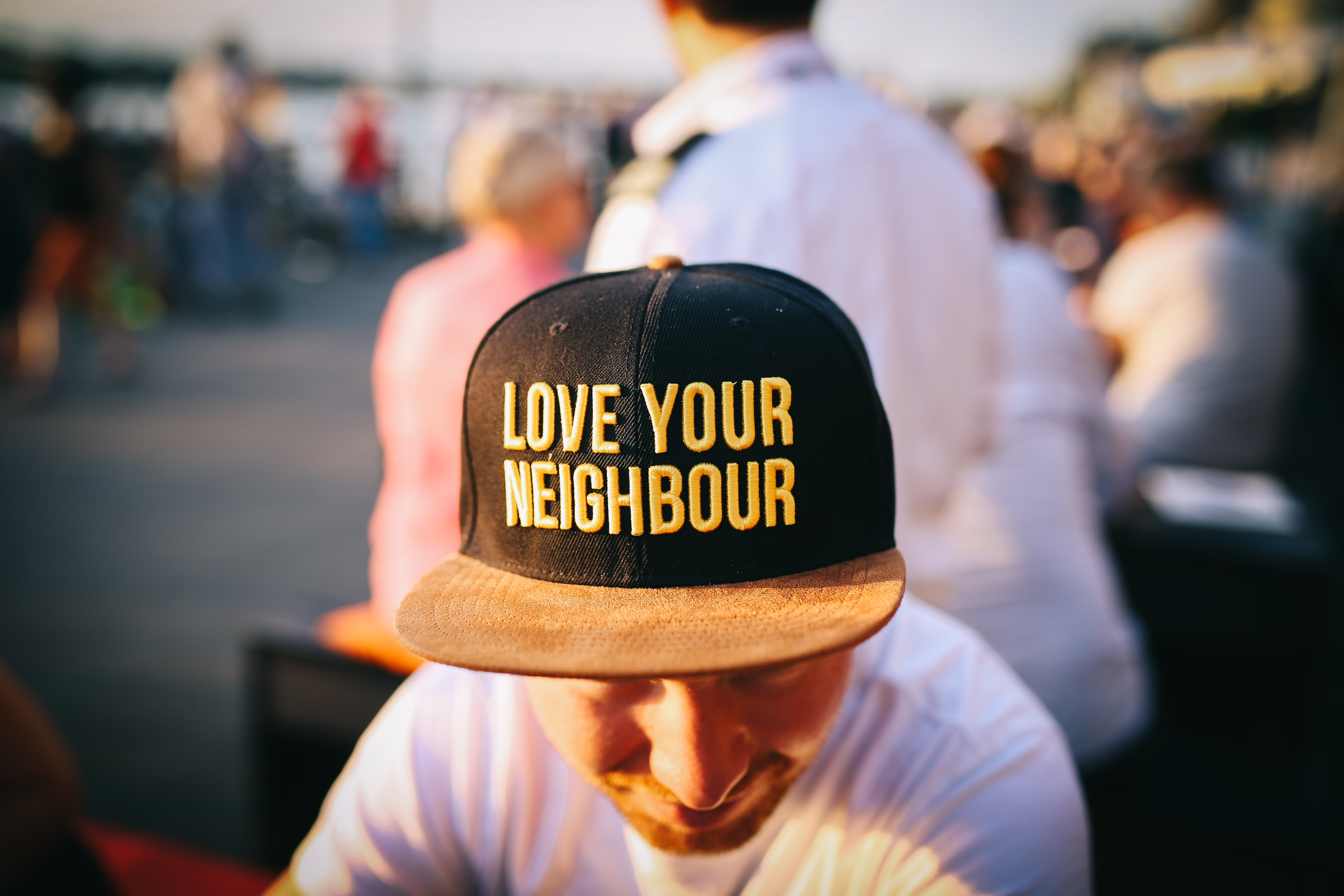
Herein lies one of the key shortcomings of US culture. We value the individual over the community. I can do what I want, and it doesn’t matter if anyone else pays the price, it is my right. As the great Ayn Randian philosopher Lord Farquad says in Shrek, “Some of you may die, but that is a price I am willing to pay.”
This is my hope, post COVID in the United States. I hope that we can find a way to root out this detrimental and destructive individualism. The individual is not god. I am not the center of the Universe. My rights don’t trump my neighbor’s well-being. We need a return to community, a return to seeking a common good. We need to ask how I can help my brother or sister, not how I can get my way.
 Blake Hart
Leave a comment