We’ve all heard that phrase, “We don’t give handouts but a hand up,” before. Some of us, myself included, have even said those words. The meaning is clear, we don’t want to just give something away, but we want to train, equip, or give away something that will make the other person not need it in the future.
That’s a good start to fixing our old models of “helping” the poor, but it’s not complete. The problem is that it still places us in a position of power. We are still the one giving and they are receiving, as if they had nothing to offer in the first place. It’s still very paternalistic, even if unintentionally so.
What we need is to find a way to where we join hands in solidarity with the marginalized and join in their struggle to realize dreams that society has often worked hard to squelch. It’s as Virgil Elizondo wrote about the beginning of the liberation theology movement:
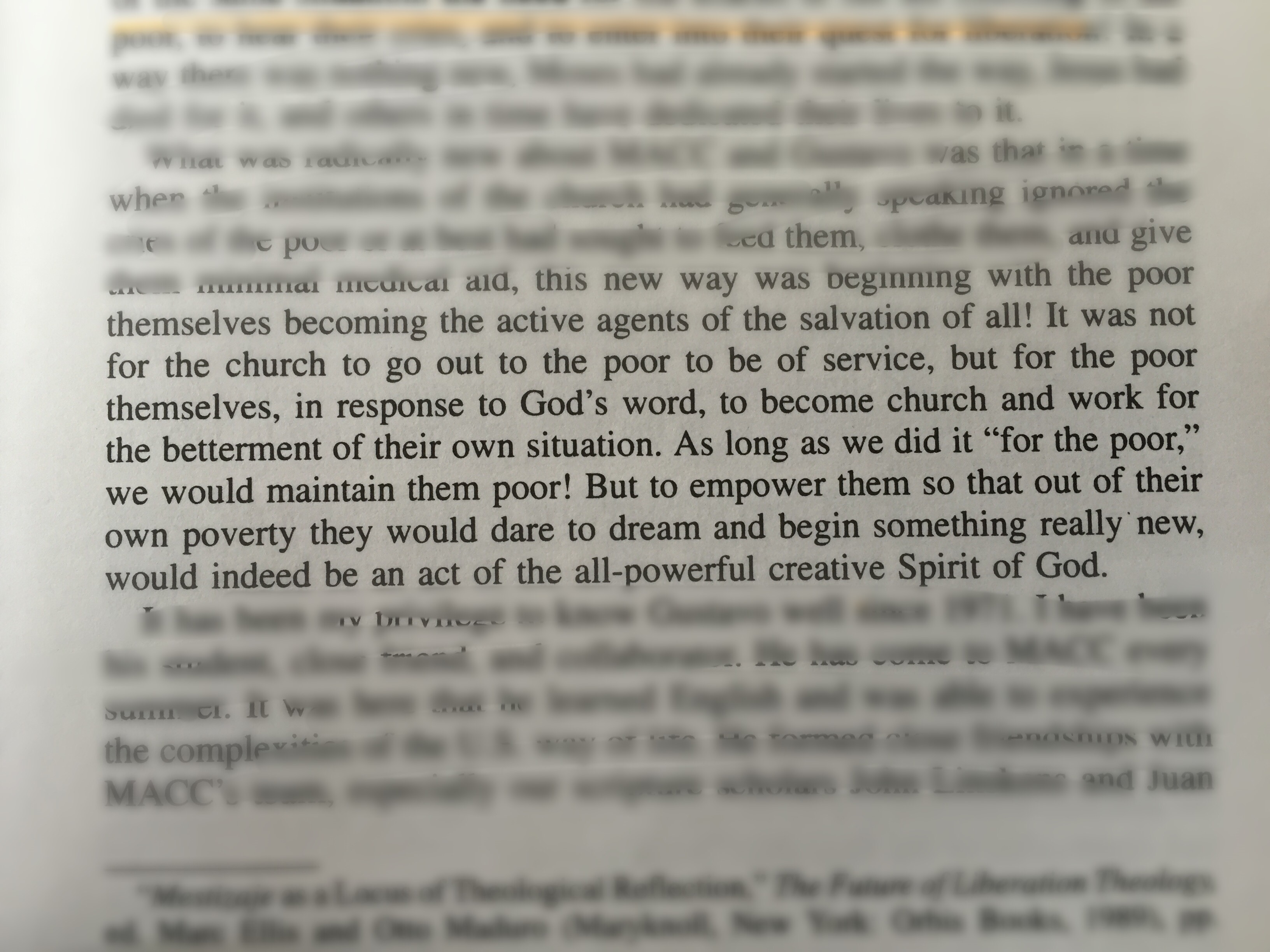
We don’t need to do it “for” the poor. Or even worse “to” the poor. Those are the wrong prepositions. We need to do our work with the poor.
I wonder what this would look like in the US church, if we began to incarnate ourselves in the world as Christ did? What would happen if instead of trying to offer benevolence to “those poor people” we began by inviting them to the table, getting to know their names, and then empowering them to dream dreams they never dreamed before. Then, together, we worked to make those dreams a reality.
No longer would we have clients we served from a position of power and privilege. We would have brothers and sisters with whom we partnered to fulfill God’s calling in their life. We wouldn’t see deficient people in need, but gifted people from whom we could learn a thing or two.
It’s not a handout. It’s not a hand up. It’s your hand in mine, as we journey together towards wholeness and towards peace.
 Blake Hart
Leave a comment